A long drive is a great way to see the country, but a breakdown hundreds of miles from home can quickly spoil the fun. A short pre-trip check and a well-packed kit handle most of the problems drivers run into.
Check the car
- Tires: check the pressure when the tires are cold, using the figures on the sticker inside the driver's door. Look for uneven wear or damage, and check the spare too.
- Fluids: top up washer fluid and check oil and coolant levels, following the owner's manual.
- Lights: walk around the car with the headlights, brake lights and turn signals on.
- Wipers: replace blades that streak or squeak.
- Battery: if it is more than three or four years old, ask a parts store to test it before you leave.
- Service: if the car is due for an oil change or service, have it done a week before the trip.
Pack the emergency kit
- Jumper cables or a charged portable jump starter
- A portable tire inflator and pressure gauge
- Reflective warning triangles and a reflective vest
- A flashlight or headlamp with spare batteries
- A first-aid kit and any medications you need
- Water and non-perishable snacks for everyone in the car
- A phone charger, a charged power bank and a paper map
- Gloves, a multi-tool and duct tape
- A blanket and rain jacket
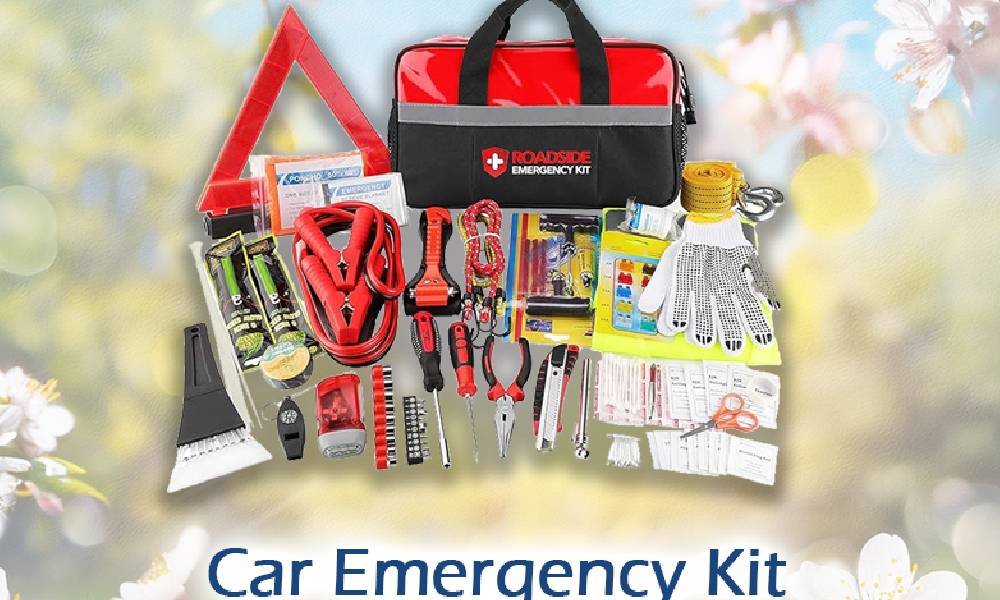
A ready-made roadside emergency kit covers most of these in one bag. Add water, snacks and medications before you set off.
Plan the drive
- Share your route and expected arrival time with someone at home.
- Plan fuel and rest stops, especially through remote areas where gas stations are far apart.
- Check the weather forecast along your route, not just at your destination.
- Save your insurer's roadside assistance number in your phone.
On the road
- Take a break at least every two hours, and swap drivers if you can.
- Keep the fuel tank above a quarter full in rural areas.
- If you break down, pull as far off the road as you safely can, turn on the hazard lights and set out warning triangles behind the car.
- If you feel drowsy, stop somewhere safe and rest. Coffee and an open window are not a substitute for sleep.